Does Your Child’s Spine Need Attention?
What Gonstead Chiropractic Reveals that Other Methods Miss

Most parents keep a close eye on their child’s health — vaccines, dental checkups, annual physicals. But one area that often goes unexamined until something hurts is the spine. And by the time a child complains of back pain or shows visible postural changes, the issue has often been developing quietly for months or even years.
At Cornerstone Community Chiropractic, we believe spinal health is foundational — literally. It’s not something to address after the fact. It’s something to understand clearly, early, and precisely. That’s exactly what the Gonstead method of chiropractic care is designed to do.
overview
What is the Gonstead Method — and Why Does It Matter for Kids?
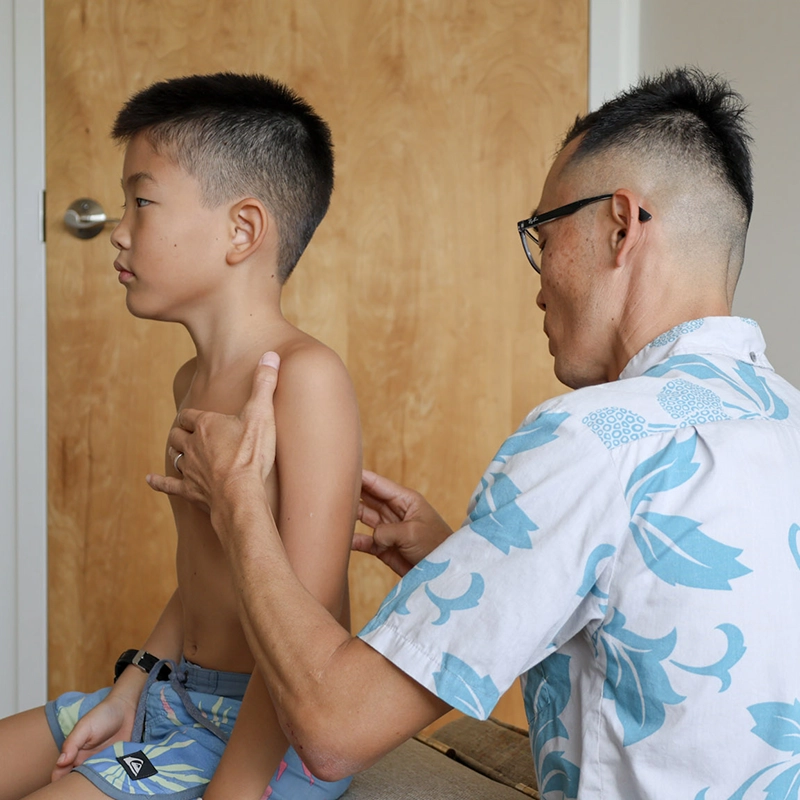
Gonstead chiropractic is one of the most thorough and specific approaches in the chiropractic field. Rather than a general adjustment or a broad assessment, Gonstead focuses on finding the exact location and nature of a spinal problem — and correcting it with precision.
For children, this matters more than most parents realize. Keiki’s spines are still developing. The patterns established now — from posture to spinal alignment to nerve function — can influence how they feel, move, and function for decades. A developing spine that has an uncorrected misalignment doesn’t just stay the same; it adapts around the problem, which can create compensatory patterns that become harder to address over time.
The Gonstead method was built for exactly this kind of precision work using five specific components to assess and correct spinal issues:
“A developing spine that has an uncorrected misalignment doesn’t just stay the same. It adapts around the problem.”
1. X-Ray Analysis
Full spinal X-rays give our doctors a clear, objective picture of what is actually happening in your child’s spine — not a guess, not a generalization. We can see the precise angle of misalignment, identify any curvature concerns, and track changes over time. This isn’t guesswork. It’s your child’s actual foundation.
2. Instrumentation — Nervoscope / Thermography
A specialized instrument called a Nervoscope (or thermal scanner) detects uneven heat patterns along the spine. These temperature differences indicate areas where nerve irritation or inflammation may be present — even before a child shows obvious symptoms. This is one of the most important tools we have for identifying problems that aren’t yet visible or painful.
3. Static Palpation
Our doctors manually feel the spine while the child is still, identifying specific areas of swelling, tenderness, or abnormal tissue texture. This helps confirm what the X-ray and instrumentation have revealed.
4. Motion Palpation
We also assess how each spinal segment moves — or doesn’t move. Restricted motion in a joint that should be mobile is a key indicator of dysfunction that needs to be addressed.
5. Visualization
Together, these five components allow us to deliver a specific, targeted adjustment — only to the vertebrae that need it, in exactly the direction they need it. No unnecessary manipulation. No guessing.
FREE Keiki Screening at Cornerstone!
We’re offering a Summer Scoliosis Screening — a simple, non-invasive assessment that gives you a clear picture of where your child’s spine stands. If we find something, you’ll know exactly what it is and what your options are. If everything looks great, you’ll leave with peace of mind. Available at all four Cornerstone locations across Oahu.
DISCOVERY
What We’re Looking for: Understanding Spinal Curvature in Kids

One of the most common concerns we see in children and teens is scoliosis — a lateral curvature of the spine. It’s more common than most families realize: the American Association of Neurological Surgeons estimates that scoliosis affects 2–3% of the population, with most cases developing between ages 10 and 15.
The challenge is that scoliosis often has no obvious symptoms in its early stages. A child may not complain of pain. You might notice a slight difference in shoulder height or that clothes hang unevenly — but it’s easy to dismiss these as normal variation. They may not be.
Early detection matters. When caught before skeletal maturity, spinal curves are more responsive to care. When left unmonitored, curves can progress — and intervention becomes more complex.
–The American Association of Neurological Surgeons estimates that scoliosis affects 2–3% of the population, with most cases developing between ages 10 and 15–
OTHER FACTORS
It’s Not Just Scoliosis: Other Reasons to Have Your Child’s Spine Assessed
Scoliosis gets the most attention, but it isn’t the only reason a growing spine deserves a closer look. We regularly see children and teens presenting with:
Tech neck — the forward head posture developing in kids who spend hours on screens, which places enormous additional load on the cervical spine
Backpack strain — heavy backpacks worn incorrectly are one of the most overlooked contributors to spinal stress in school-age kids
Sports-related micro-injuries — repetitive movements or contact sports can create cumulative spinal stress that kids often dismiss as normal soreness
Birth-related misalignment — even routine deliveries can place significant force on an infant’s cervical spine; we see many families who wish they’d brought their child in sooner
In each of these situations, the Gonstead method gives us the detail we need to understand what’s actually happening — and the precision to address it correctly.
what to know
What to Expect at a Cornerstone Pediatric Visit
We know that bringing a child to a chiropractic appointment can feel unfamiliar. Here’s what a first visit looks like at Cornerstone:
- A thorough consultation with one of our Gonstead-trained doctors, reviewing health history and any specific concerns
- A full postural and motion assessment
- Thermography scanning
- X-rays, if clinically indicated
- A clear explanation of findings in plain language — no jargon, no pressure
Our goal is always that you leave understanding your child’s spine better than when you walked in.
“Early detection matters. When caught before skeletal maturity, spinal curves are more responsive to care.”
TAKEAWAY
Healthy Spines Are Built, Not Just Inherited
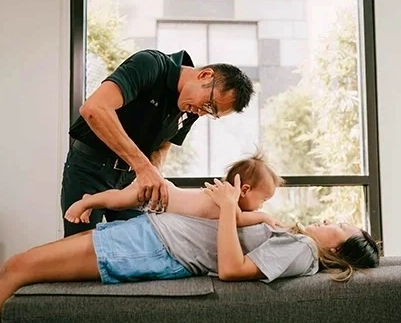
One of the most important things we try to help families understand is that spinal health is dynamic. It responds to how we move, how we sit, what activities we do, and whether small problems get addressed before they become bigger ones. The Gonstead method gives us the tools to see clearly and act precisely. But the earlier we get that picture, the more options your family has.
This summer, don’t wait for your child to complain. Book a scoliosis screening or a full pediatric assessment at any of our four Oahu locations — Kailua, Kapolei, Kaka‘ako, or Ewa Beach — and let’s take a clear look at the foundation your child is building their health on.